



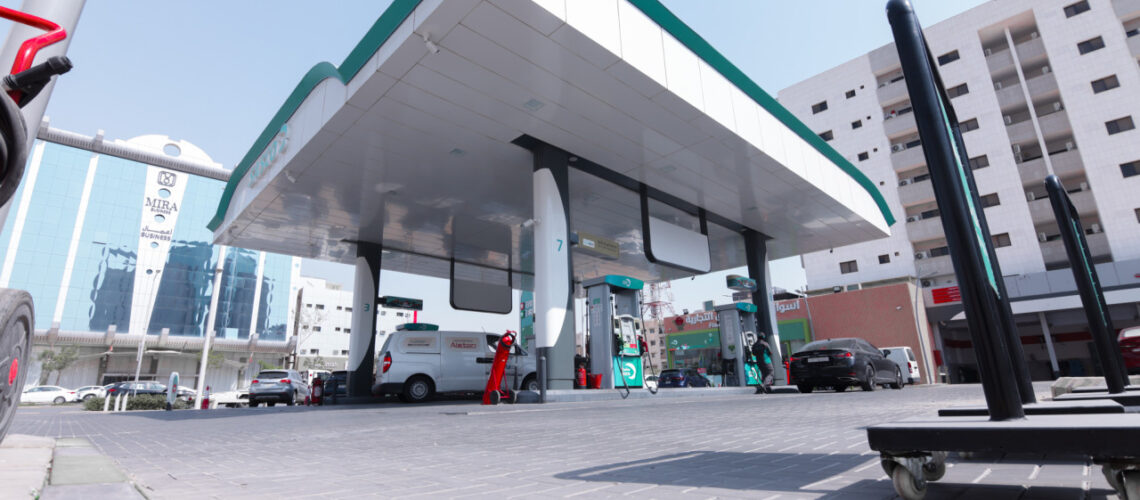
A fuel station is regulated more tightly than most buildings of its size, and for good reason. The retail element is the visible part; the engineering that matters is mostly below ground and in the systems nobody sees.
Tanks, containment and separation
Tank installation, leak detection and containment are the core of the design, along with separation distances between dispensing areas, buildings and the site boundary. These are safety requirements, and they constrain the site layout before anything else does.
Forecourt drainage
Forecourt runoff cannot be discharged like ordinary surface water. Interceptors, falls and the extent of the contained area are part of the approval, and they interact with the canopy and dispenser layout.
Circulation decides whether it works
Entry and exit points, queuing space and the path between dispensers and the shop determine throughput. A station that is safe and compliant can still perform poorly if vehicles block each other at the busiest hour.
Tanker access is a separate question again. The delivery vehicle needs to reach the fill point and leave without crossing the queue, and that requirement is easiest to satisfy while the site plan is still on paper.
The canopy and what sits under it
The canopy carries lighting, signage and often the drainage falls above the dispensers, so its structure has to be coordinated with all three rather than designed as a roof and fitted out afterwards.
Lighting levels under a canopy also do more than illuminate. They are the main thing that makes a station visible and legible from the road at night, which is when the difference between stations is most obvious to a driver.